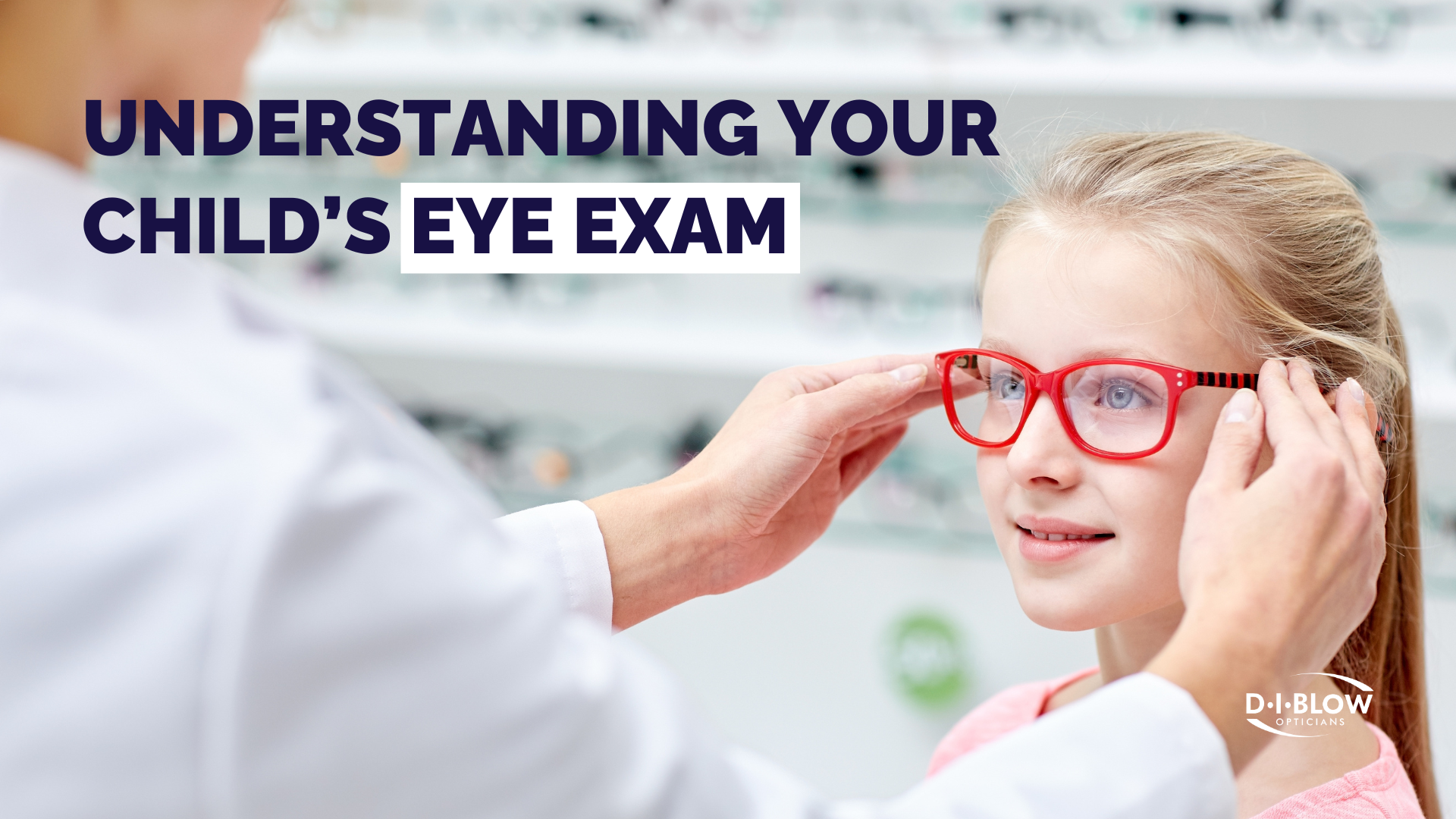
The world of optometry contains a lot of inaccessible, jargon-based language that can be hard to understand. When taking your child for an eye exam this can be especially daunting as you want to understand what is best for your child and how you can help them. Whilst the optometrist will walk you through the results of your child’s vision test, it’s good to have your own baseline understanding.
Understanding Eye Test Results: Refraction Tests
As part of a comprehensive eye exam, people are routinely given refraction tests. A refraction test is designed to test how clearly a patient can see by measuring how much light hits their retina. The results of this test will determine if a patient needs a glasses prescription or other type of vision correction.
There are different types of refraction tests and your child’s optometrist will choose one or more of the following:
- A computerised test that uses a machine to determine how much light is moving through your child’s eyes.
- A manual light reflex test where the doctor shines a light into each eye and measures how much light is reflected by the retina.
- A phoropter test in which your child’s face is positioned against a mask-like device called a phoropter. They will be asked to look through the device at an eye chart 20 feet away and identify the pictures or letters on it if they are able. The test is to find the smallest row of items that the child can see.
If you’re told your child has 20/20 acuity, it means there is no refractive error to correct. On your child’s eye chart, this will show as a 0 meaning no issues with their vision.
It’s fairly common for children to have some type of refractive error. This means the light passing through the lens of the eye is not hitting the retina in the right spot. The most common refractive errors that your child might get diagnosed with are:
- Myopia (Nearsightedness): Difficulty seeing objects in the distance clearly. Light is focused in front of the retina instead of directly on it.
- Hyperopia (Farsightedness): Difficulty focusing on objects up close. Light is focused behind the retina instead of directly on it.
- Astigmatism: Causes blurred vision and difficulty seeing both up close and far away. This happens when the cornea is not the usual spherical shape but instead slightly elongated like an egg.
On your child’s eye chart myopia will be written as a minus (-) sign next to a number whilst hyperopia will be written as a plus (+) sign next to a number. The greater the number, the greater the refractive error, and therefore the stronger the prescription.
Astigmatism will be written as a cylinder, representing the amount of astigmatism present. The axis of the cylinder will show where the astigmatism is located.
Other abbreviations you might see on your child’s eye chart include:
- OD: Meaning right eye
- OS: Meaning left eye
- OU: Meaning both eyes
In an eye exam each eye is evaluated separately, however how the eyes function together is important. If there is a big difference between the vision of the two eyes, this is called anisometropia. In severe cases your child will be put forward for amblyopia treatment, this is commonly referred to as ‘lazy eye’.
Want To Learn More About Children’s Eye Exams?
You can read out blog titled ‘the Importance of Regular Eye Exams for Children’ here.