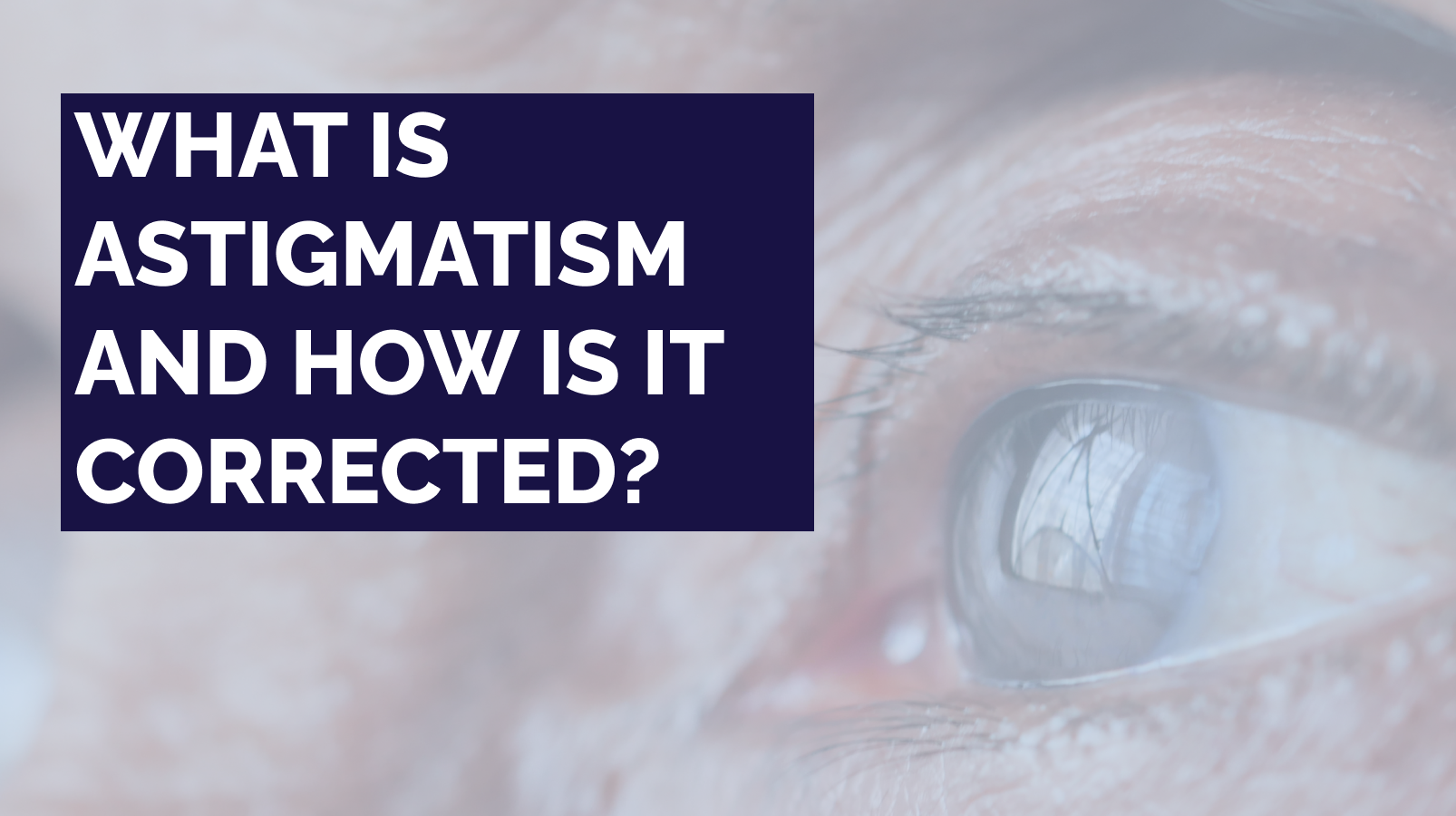
Astigmatism is a common eye condition where your eyeball is more curved than it should be; it’s a type of refractive error that causes blurred vision. Thankfully, astigmatism is easily diagnosed and treated with corrective lenses.
What is Astigmatism?
Typically, our eyeballs are round, but those with astigmatism will have an eye shape more akin to that of a rugby ball. This means that light entering your eyes bends unevenly, not focusing correctly on the retina, and affects your vision at all distances. You can either be born with astigmatism or it can develop over time.
What Causes Astigmatism?
Astigmatism is usually hereditary. It can also be caused by your eyelids putting too much pressure on your cornea. Health conditions don’t usually cause astigmatism; however, some conditions that can cause astigmatism include:
• Eye injuries
• Keratoconus
• Complications after eye surgery
Types of Astigmatism
A standard eye has a spherical cornea or lens, meaning the curves around the eye are the same. An eye with astigmatism has a steep curve and a flat curve, also known as the two principal meridians.
Regular Astigmatism
Regular astigmatism occurs when the two principal meridians are 90 degrees apart, with one meridian steeper than the other.
This type of astigmatism is the most common and can be corrected by glasses, contact lenses, or laser surgery.
Irregular Astigmatism
Where regular astigmatism occurs when the two principal meridians are always at right angles, irregular astigmatism happens when the two principal meridians are not symmetrical. The curvature of your cornea is uneven. This type of astigmatism is harder to correct than regular astigmatism.
Irregular astigmatism is typically caused by eye diseases such as keratoconus, corneal degeneration, corneal scarring, or ocular surface disease.
What are the Symptoms of Astigmatism?
The most common symptoms of astigmatism are blurred vision and the inability to see details on objects, such as the words printed on a menu in front of you or letters on a road sign in the distance.
Other astigmatism symptoms include:
• Headaches
• Fatigue
• Eye strain
• Squinting to see clearly
• Seeing a glare or halos around lights
Young children might not know that there’s anything wrong with their vision, even if they’re experiencing symptoms. Take your child to the optometrist if you notice them squinting, rubbing their eyes, or having frequent headaches.
Astigmatism in one eye may cause amblyopia, also known as lazy eye. It’s important that this is spotted early so it can be treated.
How is Astigmatism Diagnosed?
Your optometrist can diagnose astigmatism during an eye exam. Your optometrist might use a few tests to diagnose astigmatism, including:
• Visual Acuity Test: A visual acuity test is a test that checks your vision. You’ve had a visual acuity test if you’ve ever looked at a wall chart of letters or symbols during an eye exam.
• Refraction Test: Your optometrist will measure how much light is focused and is bent as it enters your eye.
• Keratometry: Keratometry measures your cornea’s curve.
• Slit Lamp Exam: A slit lamp is a special microscope with a bright light that your optometrist shines into your eye. They’ll adjust the brightness and thickness of the light’s beam to see the different layers and parts of your eye.
Treatments for Astigmatism
Astigmatism doesn’t always require treatment, but treatment options may include glasses, contact lenses, or laser surgery.
Glasses Pros:
• The cheapest option
• May be available free or discounted on the NHS
Glasses Cons:
• Could get lost or broken
Contact Lenses Pros:
• Choice of soft or hard lenses
• It can be a good choice if you have an active lifestyle
• May be free or discounted on the NHS
Contact Lenses Cons:
• It may not be suitable for everyone
• Risk of eye infection through poor contact lens hygiene
Laser Eye or Lens Surgery Pros:
• May be permanent
• It may be better for people with more severe vision problems
Laser Eye or Lens Surgery Cons:
• Risk of complications during or after surgery
• Not available on the NHS
• Can be expensive
• Possible side effects
–
Astigmatism is a common vision problem, but it can be easily and effectively corrected. If you suspect that you may have astigmatism or have experienced a change in your vision, get in contact with your local D.I. Blow Opticians today.