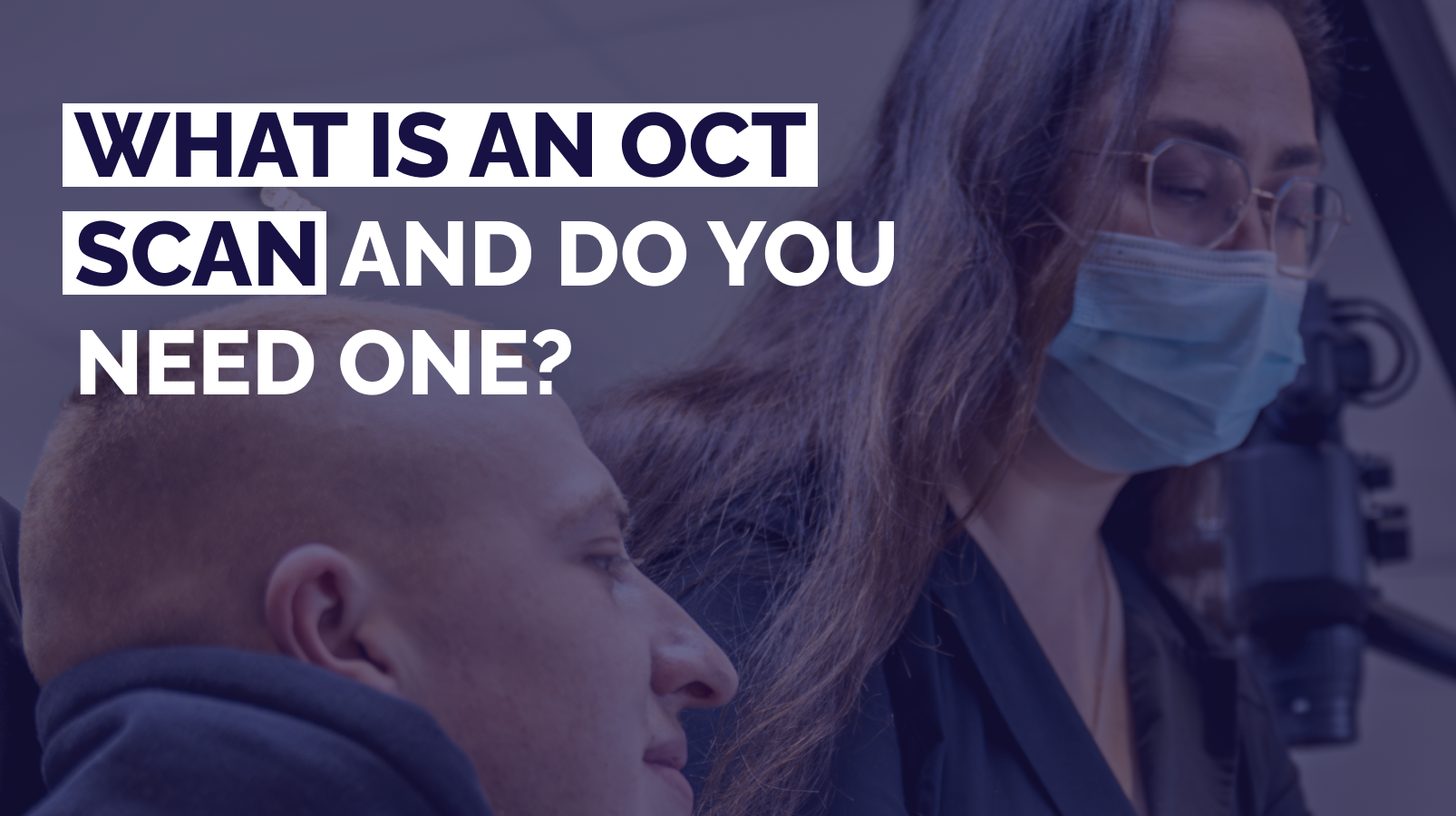
An Optical Coherence Tomography (OCT) scan is a non-invasive, high-resolution imaging test that utilises light waves to create a detailed 3D image of the internal structures of your eye, particularly the retina and optic nerve.
You should consider getting an OCT scan if you are aged 25 or over, have diabetes, a family history of eye diseases, or have been diagnosed with an eye condition like glaucoma or Age-related Macular Degeneration (AMD).
The scan can detect severe eye conditions, such as glaucoma, diabetic retinopathy, and detached retina, often years earlier than traditional methods, leading to quicker treatments and better outcomes.
How Does an OCT Scan Work?
The scan is quick, painless and takes only a few minutes. You’ll be asked to look into a machine while it scans your eyes. No drops or preparation are usually required.
The device captures 3D, high-resolution images of your eye. These images are stored, allowing your optician to compare results over time and track even the smallest changes in your eye health.
What Can an OCT Scan Detect?
An OCT can detect eye conditions that could be threatening to your vision and typically don’t have symptoms until they’re impacting your eyesight.
Many eye conditions form at the very back of the eyes. An OCT scan enables your optician to identify subtle changes over time, such as changes in the vitreous (the jelly-like substance that fills the eye), the retina (the light sensitive layer at the back of the eye), the macula (the area at the centre of the retina responsible for our central vision), and the optic nerve (the part of your eye that transmits light impulses to the brain to produce the images we see).
Conditions that can be detected include:
1. Glaucoma
OCT can measure the thickness of the optic nerve and retinal nerve fibre layers, helping to detect glaucoma early, often before vision loss occurs.
2. Age-Related Macular Degeneration (AMD)
OCT can reveal tiny changes in the macula, the central part of the retina responsible for sharp vision. Early detection of AMD allows for better management and, in some cases, treatment.
3. Diabetic Retinopathy
In people with diabetes, OCT can show leakage, swelling or changes in the blood vessels at the back of the eye. Early diagnosis is vital for protecting sight.
4. Macular Holes and Retinal Conditions
The scan can reveal structural issues, such as macular holes, epiretinal membranes, or retinal detachments, that could lead to severe vision loss if left untreated.
5. Monitoring Eye Health Over Time
Even if no immediate problems are found, an OCT scan provides a detailed baseline image of your eye health. This makes it easier to spot subtle changes in the future.
Do I Need an OCT Scan?
The answer depends on your age, health, and risk factors for eye disease. While OCT scans aren’t always part of a standard NHS eye test, many independent opticians in the UK offer them as an additional service because of the benefits they provide.
You may benefit from an OCT scan if:
• You are over 40, particularly if glaucoma runs in your family.
• You have diabetes, as regular OCT scans can help detect diabetic retinopathy early.
• You have a history of eye conditions or vision problems.
• You want peace of mind that your eye health is being monitored at the highest level.
Even if you have no symptoms, an OCT scan can give reassurance and help your optician identify problems long before you notice them yourself.
How Often Should I Have an OCT Scan?
For most people, having an OCT scan every 1–2 years is a sensible way to monitor their eye health. However, your optician may recommend more frequent scans if you’re at higher risk of certain conditions.
Since OCT images can be compared over time, regular scans create a detailed history of your eye health, making it easier to detect even the slightest changes.
An OCT scan is one of the most advanced tools available in modern eye care. It can detect conditions such as glaucoma, macular degeneration and diabetic retinopathy at the earliest possible stage, long before symptoms appear.
–
So, do you need one? If you value your vision and want peace of mind, the answer is yes. At D.I. Blow Opticians, we recommend OCT scans as part of regular eye care, especially for patients over 40 or those with risk factors for eye disease.
Protecting your sight has never been easier, or more important. To book your OCT scan and comprehensive eye test, contact our team today.