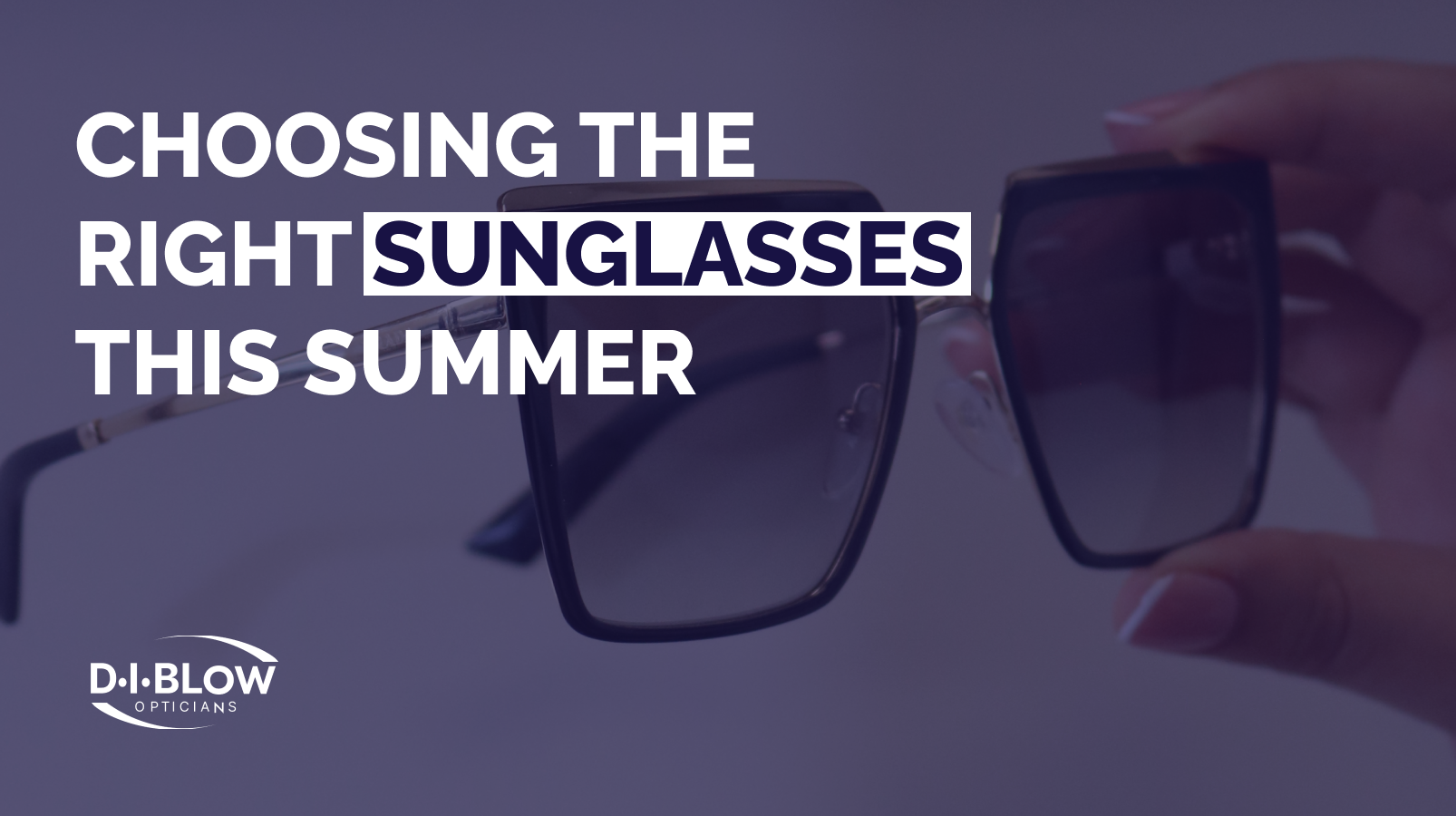
Summer is on the horizon at last. That means it’s time to get the shades out, but do you know the difference between just a stylish pair and a pair that will protect your eyes properly from the sun?
Alongside numerous shapes and styles, sunglasses also come with a variety of lens options to suit your lifestyle. From tinted and mirrored coatings to polarised and transitional lenses, there’s something to match everyone preferences.
In this guide, we’re going to cover all things sunglasses and help you find your perfect pair.
Getting Maximum UV Protection
More sun means stronger UV rays, more time spent outside, and a whole lot more sunglasses usage.
For the best protection, look out for these features:
• UVA and UVB protection
• A UV 400 label which ensures 100% protection
• A ‘CE Mark’, showing that the sunglasses conform to EU safety standards
Visible Light Transmission
Depending on your needs, you should also look out for the VLT (Visible Light Transmission) percentage on your next pair of sunglasses. The higher the percentage, the more light that will pass through the lens to your eyes.
• 0-19% VLT: Best for bright, sunny conditions
• 20-40% VLT: For all purpose use
• 40+% VLT: Good for overcast and low-light conditions
• 80-90% VLT: Used for very dim and night conditions
Bonus Advice
Darker lenses do not necessarily block more UV rays. Check the UV labels to ensure maximum protection.
UV rays can penetrate thin clouds, so wearing sunglasses should not be confined to just bright summer sunshine.
Oversized or wraparound lenses will protect a larger area of your face.
The Different Types of Sunglasses Lenses
When choosing which sunglasses lenses are right for you, ask yourself the following:
• How often will you be wearing your sunglasses?
• Do you want to block blinding, reflective glare?
• Where will you be wearing your sunglasses?
• What activities will you be doing whilst wearing sunglasses?
• Do you want a bespoke tint, gradient, or lens feature?
• What’s your budget?
Gradient Lenses
Traditional frame tints consist of one block colour, but gradient sunglasses lenses have two tones, with a darker tint at the top of the lens fading to a lighter tint at the bottom.
This effect makes them the perfect sunglasses lens for inside and outside because whilst your eyes are shielded from sunlight from above, you have a clear view of objects closer to you.
Mirrored Lenses
Mirrored lenses have a thin, reflective film applied to the lenses that reflects light and glare away from your eyes. Because of this, mirrored sunglasses are popular for those participating in outdoor activities such as skiing, water skiing, and running as they minimise light disturbance and offer a better viewing experience.
Polarised Lenses
The specialised coating on polarised sunglasses lenses completely blocks reflective light, ensuring it bounces off the lens of your sunglasses and away from your eyes.
These are great no matter your lifestyle and can be fitted into any shape, size, tint, gradient, prescription, and brand of sunglasses.
Photochromatic Lenses
Photochromatic lenses, also known as transitional lenses, offer a smooth visual transition from one area to another with clever lenses that respond and adapt to the amount of light available. For darker settings, transitional settings become transparent allowing more light in for you to focus clearly. As the light strengthens, the lens darkens to protect your eyes and provide a more comfortable view.
Transitional lenses are also highly versatile and can be applied to any tint, gradient, or lens finish.
Lens Colours
While certain tints are recommended for particular activities, lens colour is mostly a personal preference and doesn’t affect how well the sunglasses protect your eyes from UV rays.
• Grey: The most neutral tint. It affects your colour vision the least. Great for most activities.
• Green: Provides contrast and helps reduce glare and eye strain. Ideal for golf, tennis and everyday use.
• Red or Rose: Block blue light so they improve driving visibility while reducing eye strain. They enhance detail and increase depth of field.
• Blue or Purple: Deliver enhanced colour perception. They complement most skin tones and work well in foggy weather.
• Amber or Brown: Increase contrast and heighten visual acuity. Perfect for most sports since they improve contrast against green grass and blue skies.
• Yellow, Orange, or Gold: Improve the visibility or objects, especially in moderate to low light conditions. Excellent for both indoor and outdoor activities.
Keep Them Clean, Keep Them Safe
When you’re not wearing your sunglasses, always store them in a protective hardshell sunglasses case. This will significantly reduce the risk of damage.
To clean your sunglasses, we recommend the following method:
• Rinse them under slightly warm tap water to remove dust
• Lightly rub a drop of no-lotion dishwashing liquid on the lenses and all parts of the frames
• Thoroughly rinse to remove all the dish soap
• Dry the sunglasses with a towel that’s clean and free of lint
• Use a clean microfibre cloth to remove and remaining smudges
–
Before buying new sunglasses, we recommend you schedule an eye exam with your local D. I. Blow Opticians. You might be considering non-prescription sunglasses, but even though you may see well enough to pass a driver’s vision screening without glasses, you might be able to see significantly better with prescription sunglasses. Only after a comprehensive eye exam will you know for sure.